
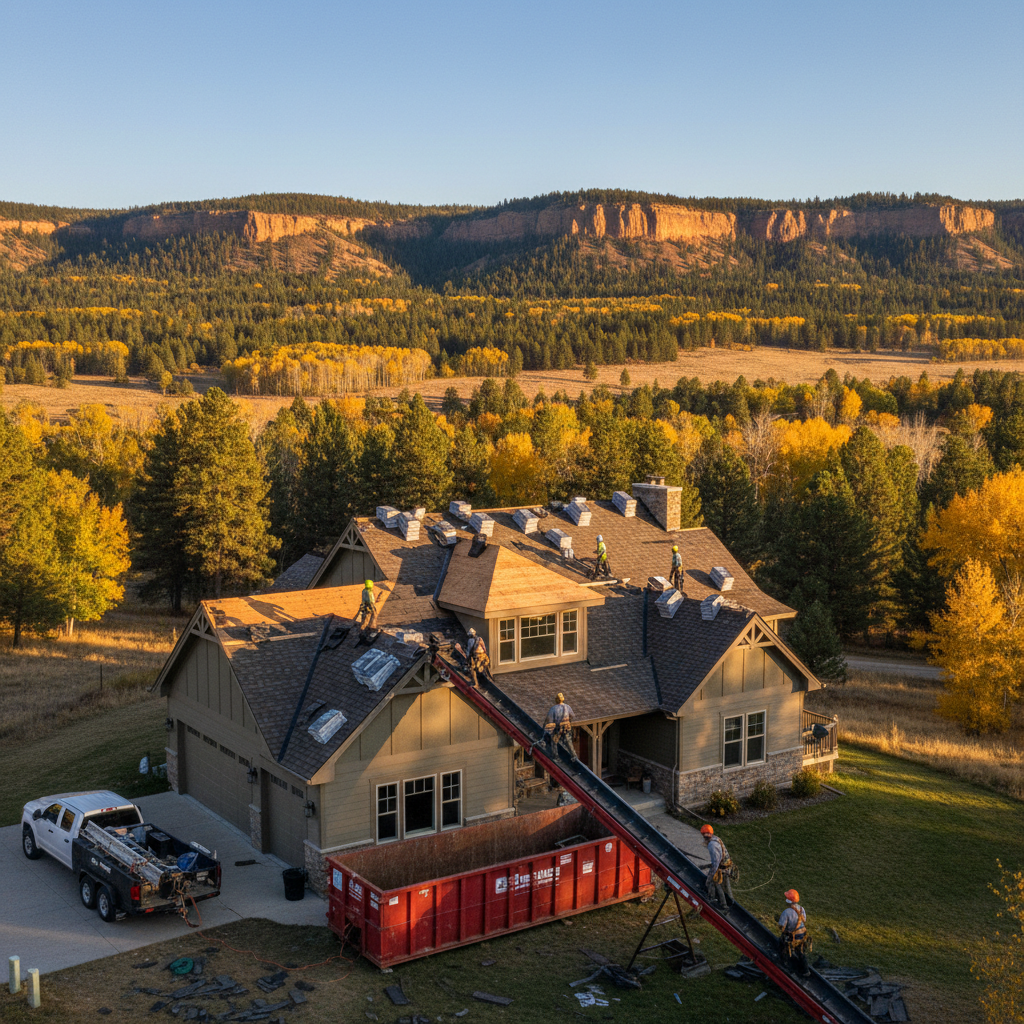
If your roof needs replacing before winter, the real deadline in Billings isn’t October or November, it’s September. Asphalt shingles need a minimum air and surface temperature to seal properly, and once nighttime lows in the Yellowstone Valley start dropping into the 30s, most manufacturers’ installation windows close for the season. Wait too long and you’re either rushing a crew in during the first cold snap or carrying a compromised roof through a Montana winter.
This isn’t a scare tactic, it’s a scheduling reality tied to how asphalt shingles actually work. Here’s what determines the real cutoff, how to tell if your roof needs to make this year’s list, and what happens if you miss the window.
Key Takeaways
- Asphalt shingle adhesive strips need sustained daytime temperatures above roughly 40-45°F to seal correctly, and Billings typically loses that reliable window by mid-to-late October.
- A full tear-off and replacement usually takes 1-3 days depending on roof size and weather, but scheduling backlogs mean the actual wait from estimate to install date can run two to four weeks in September.
- Signs that push a roof from “next spring” to “this fall” include granule loss in gutters, curling or cracked shingles, and any sign of an active leak.
- Missing the fall window doesn’t mean living with a bad roof all winter. It means either an emergency tear-off in worse conditions, or a temporary repair to get through to spring.
Why September Actually Matters for Billings Roofs
Montana’s high desert climate gives Billings a shorter true fall than it looks like on a calendar. According to NOAA climate normals for the region, the Billings area’s average first freeze lands in late September to early October, and shingle manufacturers generally recommend installation stop once daytime highs consistently fall below the mid-40s. That gives homeowners roughly a six-to-eight-week window between late summer heat and the season’s first hard freeze.
If you’re comparing local options, our residential roofing services in Billings page lays out what we install and how our systems are built for Montana’s climate. Roofing crews also get busier as fall progresses, since everyone who put off a replacement over the summer tries to squeeze in before winter at the same time. A homeowner who calls in September is scheduling into a lighter backlog than one who calls in the second half of October.
How Do You Know If Your Roof Needs Replacing This Fall?
Not every aging roof needs to go this season, but a few signs mean it shouldn’t wait for spring:
- Granules collecting in your gutters. Asphalt shingles shed protective granules as they age. A light dusting is normal; handfuls after every rain means the shingle surface is breaking down.
- Curling, cupping, or cracked shingle edges. UV exposure and temperature swings cause shingles to lose flexibility over time. Curled edges let wind get underneath them.
- Visible daylight or water stains in the attic. Any point where you can see sky through the roof deck, or find a fresh water stain on the underside of the decking, is an active leak, not a future problem.
- A roof already past 20-25 years old. Most asphalt shingle roofs in Montana’s climate are rated for 20-30 years, but wind, hail, and freeze-thaw cycling tend to shorten that in practice.
- A recent hail or wind event with visible damage. Storm damage that isn’t addressed before winter tends to worsen fast once ice and snow load get involved.
If two or more of these apply, this fall is the right window, not next spring.
What Actually Happens During a Fall Roof Replacement?
A residential roof replacement in Billings typically runs through the same core steps regardless of season: a full tear-off of the old roofing material, an inspection of the roof deck for any rot or damage underneath, replacement of damaged decking, installation of ice-and-water barrier along eaves and valleys (required under Billings’ adopted roofing code for the lowest 24 inches of roof edge), synthetic underlayment, and finally the new shingles, flashing, and ventilation components.
For most single-family homes, that process takes one to three days depending on roof size, pitch complexity, and weather delays. The bigger variable in September is scheduling lead time, not install time itself. Getting an estimate scheduled in the first half of the month gives the most flexibility to actually land an install date before temperatures drop.
What If You Miss the Fall Window?
If a roof replacement doesn’t happen before the cold sets in, homeowners generally have two options. The first is a temporary roof repair, patching active leak points and reinforcing vulnerable areas, to get through winter safely and revisit full replacement in spring. The second is an emergency winter installation, which is possible but comes with real tradeoffs: manufacturers may restrict warranty coverage on shingles installed below their rated temperature range, and hand-sealing (applying adhesive manually since the sun won’t do it) adds labor time and cost.
Neither option is as good as replacing on a normal fall timeline. A same-season repair can buy time, but it’s a bridge, not a substitute for a full replacement once a roof is genuinely past its service life.
How Weather Actually Drives the Decision in Montana
Montana’s freeze-thaw cycle is what turns a small, ignorable roof problem into a real one over winter. Water that gets under a curled shingle or through a granule-thin spot doesn’t just sit there, it freezes, expands, and works the gap wider. By the time spring thaw arrives, a minor issue in September can be a full leak by March. That’s the core reason the fall deadline matters more here than it would in a milder climate: it’s not just about installation temperature, it’s about what an untreated roof goes through for the next five months.
What Does a Fall Roof Replacement Actually Cost?
Cost depends more on roof size, pitch, and shingle tier than on the season itself, but a few fall-specific factors are worth knowing. Scheduling early in September generally means more flexibility on install date, which matters if a homeowner wants the work done before a specific trip, holiday, or forecasted cold snap. Waiting until October can mean paying rush pricing if a crew has to shuffle other jobs to fit an install in before weather closes the window, or accepting a later date that pushes past the ideal temperature range entirely.
Material choice also factors in. Architectural shingles cost more per square than basic 3-tab shingles but carry a stronger wind rating, worth considering given Montana’s exposure to fall wind events. Homeowners filing an insurance claim for storm-related damage should also know that a fall replacement timeline can affect how quickly an adjuster needs to inspect and approve the claim before winter, since some insurers slow down claim processing once snow makes roof access harder.
How to Choose a Roofing Contractor for a Fall Replacement in Billings
Timing matters, but so does who does the work. A few things worth checking before booking a fall replacement:
- Manufacturer certification. Donahue Roofing & Siding, LLC is an Owens Corning Platinum Preferred Contractor, which requires meeting manufacturer standards for installation quality and carries stronger warranty backing than a standard installer credential.
- Local experience with Montana winters. A crew that’s replaced roofs through actual Billings winters understands the ice-barrier and ventilation requirements that matter here specifically, not just general roofing best practices.
- Insurance claim experience, if the replacement is being driven by storm damage rather than age alone.
- A real, scheduled inspection before any quote, not a drive-by estimate.
Frequently Asked Questions
How late in the year can you replace a roof in Billings, MT?
Most asphalt shingle installations need daytime temperatures consistently above the mid-40s to seal properly, which typically means scheduling is reliable through late September into October in the Billings area, weather dependent. After that, installation becomes riskier and may require hand-sealing.
How long does a roof replacement take?
A typical single-family home replacement takes one to three days once the crew is on site, depending on roof size, pitch, and any decking repairs needed. The longer wait is usually for scheduling, not the work itself.
Can I wait until spring instead?
If the roof isn’t actively leaking and doesn’t show major granule loss or storm damage, waiting is sometimes reasonable. But a roof that’s already showing warning signs typically gets worse, not better, over a Montana winter, since freeze-thaw cycling actively expands existing damage.
Does insurance cover a fall roof replacement?
If the need for replacement is tied to hail, wind, or another covered storm event, insurance may cover some or all of the cost. Age-related wear alone typically isn’t covered. A contractor experienced with insurance claims can help document damage properly either way.
What if I just need a repair, not a full replacement?
Not every roof needs a full tear-off. A targeted repair can be the right call for isolated damage on an otherwise healthy roof. A real inspection is the only reliable way to know which situation applies.
Ready to find out where your roof stands before winter? Contact Donahue Roofing & Siding, LLC or schedule a free inspection to get a fall replacement on the schedule before temperatures drop.